No full-frame mirrorless camera is waterproof. What separates a system that survives a season on Red Sea and Gulf reefs from one that does not is sealing, it is autofocus in near-darkness, color management, and the housing ecosystem built around it. The Red Sea holds around 350 coral species and more than 1,000 species of …
Underwater Worlds — How Nikon Z Cameras Handle Extreme Conditions
Published: September 12, 2026
by Staff Reporter
No full-frame mirrorless camera is waterproof. What separates a system that survives a season on Red Sea and Gulf reefs from one that does not is sealing, it is autofocus in near-darkness, color management, and the housing ecosystem built around it.
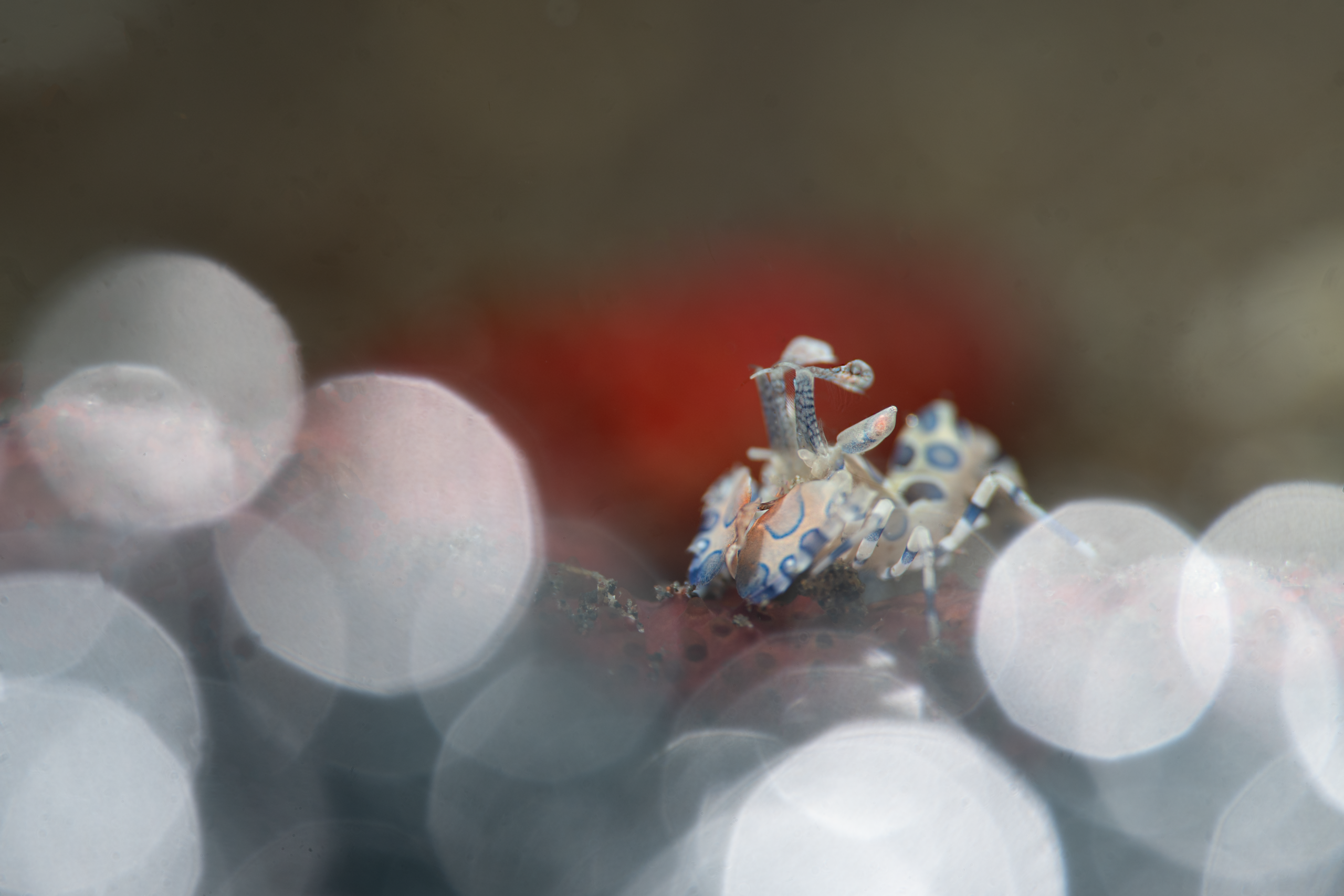
The Red Sea holds around 350 coral species and more than 1,000 species of fish, with an endemism rate of 14.7% — the third highest in the world — according to the United Nations Development Programme, which describes the basin as the planet’s last coral refuge because its reefs tolerate heat that has bleached corals elsewhere. For photographers working Sharm El Sheikh and Yanbu in the Red Sea, and Musandam and the Fujairah coast in the Arabian Gulf and the Arabian Sea, that biodiversity is the draw.
The conditions around it are the problem. Salt water, pressure, suspended particulate, a 25°C swing between a summer deck in the Gulf and a thermocline at depth, and light that falls away far faster than land photographers expect. None of it is what a full-frame mirrorless camera is built for — which is precisely why the gear conversation among underwater shooters is more specific, and more sceptical, than in almost any other genre.
Before we start: The camera never touches the water
No Nikon Z series body carries an underwater or waterproof rating, and none is marketed with one. What Nikon publishes is weather sealing — resistance to dust and moisture in field conditions, not immersion. Underwater work happens inside a purpose-built housing from a third-party manufacturer, and it is the housing, not the camera, that carries the depth rating.
Two of the most commonly specified housings for current Z bodies show the range. Nauticam’s NA-Z8 for the Nikon Z8 is rated to 100 metres, weighs 3.4kg in air, uses the maker’s N120 port system, and ships with an integrated vacuum check and leak-detection system driven by a colour-coded LED. Ikelite’s 200DL for the Nikon Z6III is rated to 60 metres, moulded from an ABS-PC blend, uses the DL (Dry Lock) port system, and is built so the rear o-ring can be inspected visually through a transparent back before the rig goes in.
That difference — 100 metres versus 60 — is not a quality judgement. It is a working-depth decision, and it should be made before the body is chosen, not after.
What is a vacuum leak-detection system?
A hand pump draws air out of the sealed housing before the dive. A sensor inside monitors whether that vacuum holds. If the seal is compromised — a hair across an o-ring, a port not fully seated, a button shaft that has not reset — the indicator changes on the boat, not at 25 metres. It has become standard on premium housings and remains the single most useful pre-dive check available.
Where Nikon’s own sealing actually become crusial
Above the waterline, the camera is exposed to everything the housing is protecting it from below: spray on an open RIB, blown sand on a shore entry, and the humidity that condenses inside a cold housing the moment it is opened in tropical air.
The Nikon Z8 carries weather sealing equivalent to the Nikon Z9, and a sensor shield that closes over the sensor during lens changes — a meaningful detail when the lens swap is happening on a pitching deck rather than in a studio. The Z8 also has no mechanical shutter at all, working entirely through an all-electronic silent shutter, which removes one of the few remaining moving assemblies from a body that spends its working life in salt air.
On the lens side, the Fluorine coat applied to the front and rear elements of much of the S-Line range repels water, dust, oil and fingerprints. That matters most during the surface interval, when a dome port comes off and a front element that has just been rinsed needs to shed water rather than hold it in spots.
For cold-water and high-altitude work, the Nikon Z6III is specified to operate down to -10°C — a figure worth reading not only as a polar-diving credential but as a general indication of how the body behaves through a long, cold, wet day.
Weather-sealed is not waterproof
Weather sealing means gaskets and overlapping seams that resist dust ingress and splashing. It carries no ingress-protection rating, no immersion depth, and no guarantee against sustained rain or a wave over the transom. Treat it as insurance for the ten minutes between the boat and the dry bag — never as a substitute for a housing.
Light is the real constraint
Water absorbs light and strips colour with depth. By the time a diver is at twenty metres on an overcast morning, the available light bears little resemblance to what a surface meter would suggest, and autofocus is doing far harder work than the frame implies.
Both the Nikon Z5II and the Nikon Z6III acquire focus down to -10EV — in photo mode, single-servo AF, single-point AF at centre, ISO 100, f/1.2 lens, at 20 degrees Celsius. The Nikon Z8 focuses to -9EV across 493 AF points and nine subject types, using the deep-learning subject detection developed for the Nikon Z9.
The qualifiers on those figures are not decoration. A -10EV rating measured with an f/1.2 lens at the centre of the frame is a laboratory ceiling, not a promise about a 14-24mm zoom behind a dome port with a strobe recycling. What the number does tell you reliably is the relative floor between bodies — and on a night dive, relative is what you are buying.
The sensitivity ranges follow the same logic. The Nikon Z8 runs ISO 64–25,600, expandable to 102,400; the Nikon Z6III and Nikon Z5II run ISO 100–64,000, expandable to 204,800. Underwater, the base end matters as much as the top: a Z8 at ISO 64 in bright shallow water holds highlight detail on a sunlit sand bed that a higher base would clip.
Speed, silence, and the shot that happens once
Marine subjects do not repeat. The Nikon Z8 shoots 20fps at full-resolution RAW, 30fps in JPEG, and 120fps at reduced resolution. The Nikon Z6III is built around the world’s first partially-stacked CMOS sensor in a full-frame camera, as of June 17, 2024, with a readout approximately 3.5x faster than the Z6II, based on Nikon measurement — and reaches 120fps at a 10.6MP DX crop.
Readout speed is not an abstraction here. It governs rolling-shutter distortion on fast-moving subjects, and it governs viewfinder blackout, which is what determines whether a photographer can hold a fast-tracking animal through a burst rather than reacquiring it afterwards.
Bodies compared — locked specifications only:
| Body | Sensor & engine | AF floor | Burst / stabilisation |
| Nikon Z8 | 45.7MP fully stacked CMOS · EXPEED 7 | -9EV, 493 points, nine subject types | 20fps full-res RAW · VR 5.5 stops (CIPA) |
| Nikon Z6III | 24.5MP partially-stacked CMOS · EXPEED 7 | -10EV (see qualifier) | 120fps at 10.6MP DX crop · VR 8.0 stops, CIPA standard |
| Nikon Z5II | 24.5MP BSI-CMOS · EXPEED 7 | -10EV (see qualifier) | 14fps mechanical / 30fps electronic · VR 7.5 stops (see qualifier) |
Qualifier, reproduced in full: autofocus detection down to -10EV applies to the Nikon Z5II and Nikon Z6III in photo mode, single-servo AF, single-point AF at centre, ISO 100, f/1.2 lens, at 20 degrees Celsius. Vibration Reduction of 7.5 stops on the Nikon Z5II is measured to CIPA 2024 standard, at centre of frame, using NIKKOR Z 24-120mm f/4 S at telephoto end in NORMAL mode.
Glass, and the port it has to sit behind
Underwater optics are decided as much by the port as by the lens. A dome port re-images the scene as a virtual image very close to the front element, which punishes lenses with weak corner performance and rewards those that hold their character to the edge of the frame.
The NIKKOR Z 14-24mm f/2.8 S is the obvious wide candidate at 650g — the world’s shortest and lightest f/2.8 ultra-wide zoom, among interchangeable zoom lenses for full-frame digital cameras with a focal range beginning at 14mm or lower and a constant maximum aperture of f/2.8, as of September 16, 2020, based on Nikon research. Its optical design renders point light sources as clean round points at the periphery even at f/2.8, which is the same property that governs how it behaves at the edge of a dome.
For mid-range work, the NIKKOR Z 24-70mm f/2.8 S II is the world’s first 24-70mm f/2.8 with an internal zoom mechanism, as of August 22, 2025, based on Nikon research. Internal zoom is not a marketing detail in a housing: the lens does not change physical length as it zooms, which simplifies port selection and zoom-gear design and removes the air-pumping that an extending barrel causes. At 675g it is also the lightest in its class, among 24-70mm f/2.8 interchangeable lenses for full-frame mirrorless cameras, as of August 22, 2025, based on Nikon research.
Topside, the NIKKOR Z 24-120mm f/4 S — a weather-sealed 5x zoom at a constant f/4 — remains the pragmatic deck lens between dives.
Do not use this product if you have a pacemaker or other medical device. The magnets in this product could cause medical devices to malfunction.
A diver’s perspective
For Khawla Al Shehi, Abu Dhabi’s first female diving instructor, photographing underwater life brings together an intimate understanding of the sea and a passion for visual storytelling. She uses Nikon Z cameras to reveal the colour, movement and remarkable detail found beneath the surface.
“Underwater photography teaches you to anticipate rather than control. Light changes, marine life moves on its own terms and every moment is fleeting. My Nikon Z camera gives me the speed and confidence to react while preserving the colour and detail that make the underwater world so mesmerising.”
— Khawla Al Shehi
What still goes wrong
Floods are almost never a failure of the camera. They are an o-ring that was not cleaned, a port that was not locked, a battery door left ajar, or a vacuum check skipped because the boat was moving. Condensation is the second recurring problem: a housing sealed in an air-conditioned room and opened in humid air will fog, which is why experienced teams seal in ambient conditions and use desiccant. And salt, given time, will find any control shaft that was not rinsed in fresh water while it was still being worked.
None of that is solved by specification. It is solved by procedure — which is the part of underwater photography that no camera comparison ever captures.
“The instinct is to ask which camera is toughest, and it is the wrong question,” says Dr. Ali Mohamad, CEO of HOC and Founder of TECHMISSION. “Underwater, the camera is the one component that is guaranteed to stay dry. What you are really choosing is a focus floor you can trust when the light is gone, a readout fast enough that you are not fighting blackout, and a lens whose corners survive being pressed against a dome. Those are engineering answers, and they are published. Everything after that is discipline on the boat.”

Subscribe to Our Newsletter
Keep in touch with our news & offers